Wisdom Tooth Extractions in Islamabad
The Surgical Mandate
Wisdom tooth removal is complex surgery, never routine. Dr. Kiran Haseeb's protocol mandates uncompromising precision: advanced planning, gentle technique, and obsessive post-operative care. This ensures a safer, complication-free path to stability for every patient in Islamabad.
The Clinical Rationale: Why Intervention is Mandatory (Expert Analysis)
Wisdom teeth (third molars) are the final structures to emerge in the mouth. They typically attempt to erupt between the ages of 17 and 25. By this critical period, the human jaw has usually completed its physical growth cycle. This means there is often insufficient, critical space for proper, full eruption. Intervention is not elective; it is structurally mandatory to prevent predictable, serious complications that compound over time.
The Problem of Impaction and Damage
The overwhelming reason for mandatory wisdom tooth extractions is impaction. When the tooth is trapped—either fully or partially—below the gum line or jawbone structure, it cannot emerge straight or fully. This leads to cascading problems that actively threaten the entire dental arch:
Chronic Infection and Pain (Pericoronitis):
When a tooth is only partially erupted, it creates a gum tissue "hood" (clinically called an operculum). This tiny, protected flap becomes a constant trap for bacteria and food debris. The result is chronic, painful infection, inflammation, and aggressive swelling around the tooth, which always demands prompt clinical attention.
Irreversible Damage to Adjacent Teeth:
The horizontal force exerted by a trapped wisdom tooth is immense and unrelieved. This pressure causes two major forms of silent harm to the healthy tooth right next to it: either root resorption (the slow dissolving of the adjacent root structure) or severe, deep decay in that healthy second molar. This often necessitates losing both teeth, not just the problematic one.
Pathology Risk (Cysts/Tumors):
In highly serious cases, the protective sac surrounding the impacted tooth can fill with fluid. This forms a cyst (like a dentigerous cyst) or, rarely, a benign tumor. These lesions aggressively destroy supporting jawbone and can cause permanent damage to nearby nerves, making early, decisive removal absolutely essential for structural safety.
The Dr. Kiran Haseeb Protocol: Precision and Surgical Safety
Patients choose this protocol specifically because it elevates a common procedure to a level of highly specialized oral surgery, guaranteeing predictable, complication-free outcomes anchored in advanced preparation and technique.
1. Advanced Diagnostic Planning and Safety Mandate
Before any wisdom tooth removal, comprehensive diagnostic imaging is non-negotiable. This protocol makes the mandatory use of 3D CBCT imaging standard for all complex or deeply impacted third molars—we rarely rely on just simple 2D X-rays alone. This detailed, three-dimensional mapping is required for three critical purposes: First, to Map Root Anatomy (identifying complex curvature and shape); second, to Assess Bone Density and surgical access; and most crucially, to Identify Nerve Proximity (assessing the precise relationship between the roots and the Mandibular Nerve). This pre-surgical mapping is the absolute foundation of patient safety.
2. Surgical Technique: Trauma Minimization and Sectioning
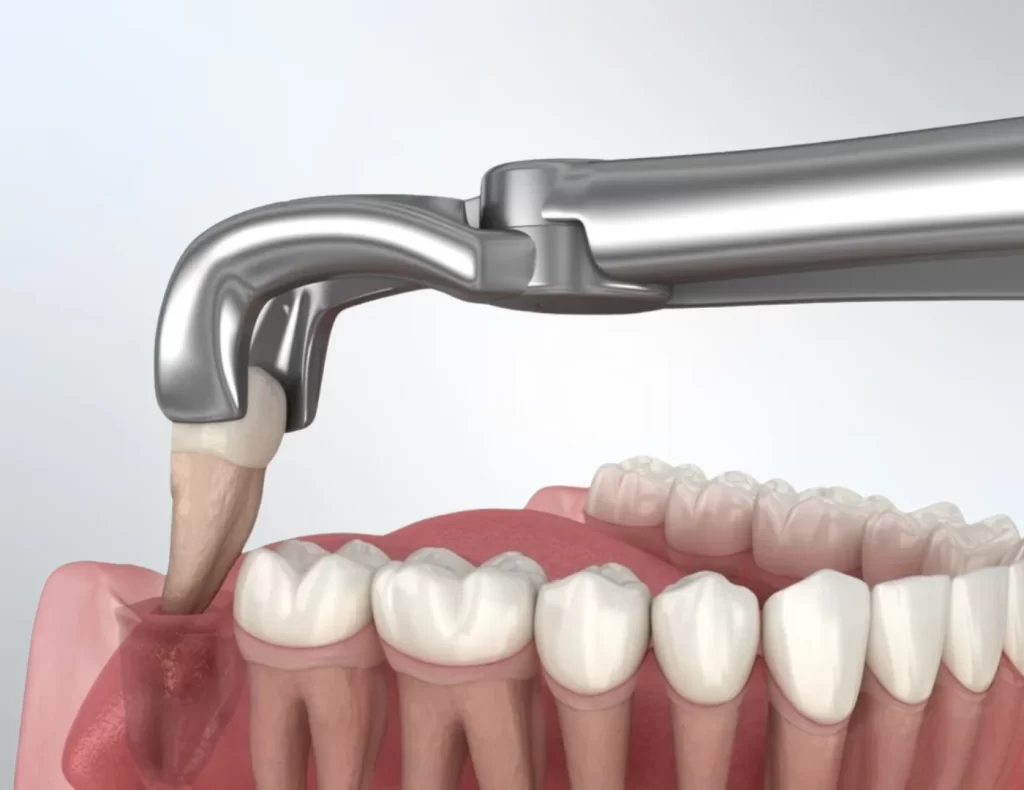
Under this protocol, all wisdom tooth procedures are classified as surgical tooth extractions due to their intrinsic difficulty. The technical sequence is rigorous: Access is achieved via a controlled, precise incision. Our technique emphasizes gentle precision, never relying on excessive, damaging force. We achieve this by focusing on sectional removal (odontotomy) of the tooth—essentially taking the tooth out in manageable pieces—and performing controlled bone removal (osteotomy) only when structurally necessary. This calculated approach is key: it drastically reduces post-operative swelling and pain, and significantly accelerates your recovery timeline. After the tooth is meticulously retrieved, we ensure the socket is flawlessly clean via Removal and Debridement, flushing out all debris and infectious matter.
3. Proactive Pain Management
A key element of Dr. Kiran Haseeb’s protocol is managing discomfort proactively. We provide a detailed, preemptive pain management prescription before the local anesthesia even begins to wear off. This aggressive, planned control is designed to manage your discomfort consistently, ensuring pain doesn’t peak unnecessarily during that critical 24-hour healing phase. This makes your recovery significantly more tolerable and predictable.
Post-Procedure Care and Healing (The Non-Negotiables for Success)
Your role in healing is absolutely critical. Adherence to the post-operative protocol isn’t optional—it’s mandatory for success. This adherence is vital for managing swelling, controlling pain, and, most importantly, preventing the painful complication known as a dry socket (Alveolar Osteitis). Your commitment guarantees a smoother, faster recovery.
Protecting the Clot: The Crucial First 24 Hours
The rule is simple: The Clot is Gold. A stable blood clot must form; it is the absolute, biological foundation for new bone growth. For the first 24 hours, patients must avoid any action that creates negative pressure or suction. This means NO rinsing, NO spitting, NO straws, and absolutely NO smoking. Suction will dislodge the clot. Patients must maintain firm but gentle biting pressure on the gauze pad for at least 30–60 minutes immediately after the procedure to encourage that crucial initial clot formation and stabilization.
Pain Management, Swelling, and Follow-Up
Look, pain is going to happen—it’s your body’s natural response to being operated on. Our job is to manage it, but your adherence is 50% of success.
Immediate Comfort and Swelling: To handle the swelling, you must start using ice packs externally (20 minutes on, 20 minutes off) right away for the first 24 hours. This limits inflammation dramatically.
Medication Rules: For the pain, take the prescribed medication exactly as directed. Get ahead of the pain; don’t wait for it to peak! And a firm warning: do not take aspirin. It messes with your body’s critical ability to clot.
Follow-Up is Mandatory: We need to see you back within a week. That Follow-Up appointment isn’t optional—it’s where we check the healing track, manage the stitches, and stop any small problem from becoming a big one. It’s our final check to guarantee a complication-free outcome.
Diet and Hygiene Mandates
Strict Hygiene is mandatory. Patients should maintain gentle care and hygiene in the rest of the mouth. Rinsing with warm salt water is only permitted after the initial 24 hours, performing gentle gravity rinses. Diet is restricted: consume soft, cool foods only for several days—avoid sharp edges, excessive heat, or crunchy textures. The patient must avoid chewing directly on the surgical site at all costs to protect the developing clot.
This Information is Medically Reviewed by Dr. Kiran Haseeb
This comprehensive clinical guidance regarding wisdom tooth extraction surgery has undergone rigorous clinical vetting by Dr. Kiran Haseeb. This ensures the protocol—from 3D imaging assessment to precise surgical execution and post-operative instruction—is rigidly grounded in the highest standards of evidence-based medicine. The mandate is always for superior safety, minimized trauma, and predictable healing outcomes.
Secure Your Consultation Today at Dr. Kiran Haseeb Dental Clinic: Stop the Pain.
Delaying necessary wisdom tooth removal risks structural failure, increased pain, and far more complex treatment later. Dr. Kiran Haseeb’s protocol combines expert clinical knowledge with an uncompromising ethical approach to provide a durable, precise, and structurally sound solution. Don’t wait for the pain to mandate action. Schedule your consultation today at Dr. Kiran Haseeb Clinic to secure the precision protocol your oral health demands.
Location: H#7, Main Sumbal Road, F10/3 Markaz, Islamabad.
Contact: 0333 0174007
Timings: Monday to Saturday, 07:30 AM – 9:00 PM – Sunday: 07.30 AM – 08.00 PM
10 YEARS EXPERIENCE
Learn More About Our Success Stories
EXCELLENTTrustindex verifies that the original source of the review is Google. Very professional and skilled, top to bottom. Cannot recommend them more highly. Dr. Kiran Haseeb is so thorough and informative, and lets you know every step of the way what’s going on so there are no surprises. Very calming, as well. Thanks toPosted onTrustindex verifies that the original source of the review is Google. Highly Recomendable For Crown,implant , tooth bridge and scaling Economical Prices Excellent and Cooprative Staff , Dr kiran as well GoodPosted onTrustindex verifies that the original source of the review is Google. I recently had a dental implant procedure done with Dr. Kiran Haseeb and I couldn’t be more pleased with the entire experience. From the initial consultation to the final placement, everything was clearly explained and professionally handled. The staff was friendly and made me feel comfortable throughout the process. Dr. Kiran Haseeb took the time to answer all my questions and made sure I was informed every step of the way. The procedure itself was smooth and relatively painless, and the healing process went exactly as expected. Now that the implant is complete, it feels just like a natural tooth! I highly recommend Dr Kiran Haseeb (Tooth crew clinic) to anyone considering dental implants #Strumannimplant #Bestsurgeonislabad #bestImplantologistPosted onTrustindex verifies that the original source of the review is Google. I visited dr Kiran last summer when I was in Pakistan .I didn’t write a comment because I don’t want to give misinformation to people .it’s been almost a year and I’m super happy and satisfied with her treatment.Honestly speaking I was scared to see a doc but must say that her office was super clean and service was great.